DeafAssist / apparatus study
A frame that reads
its surroundings.
An embedded AI model recognises environmental sounds. The frame presents a visual cue, with haptic alerts through a Bluetooth phone companion.
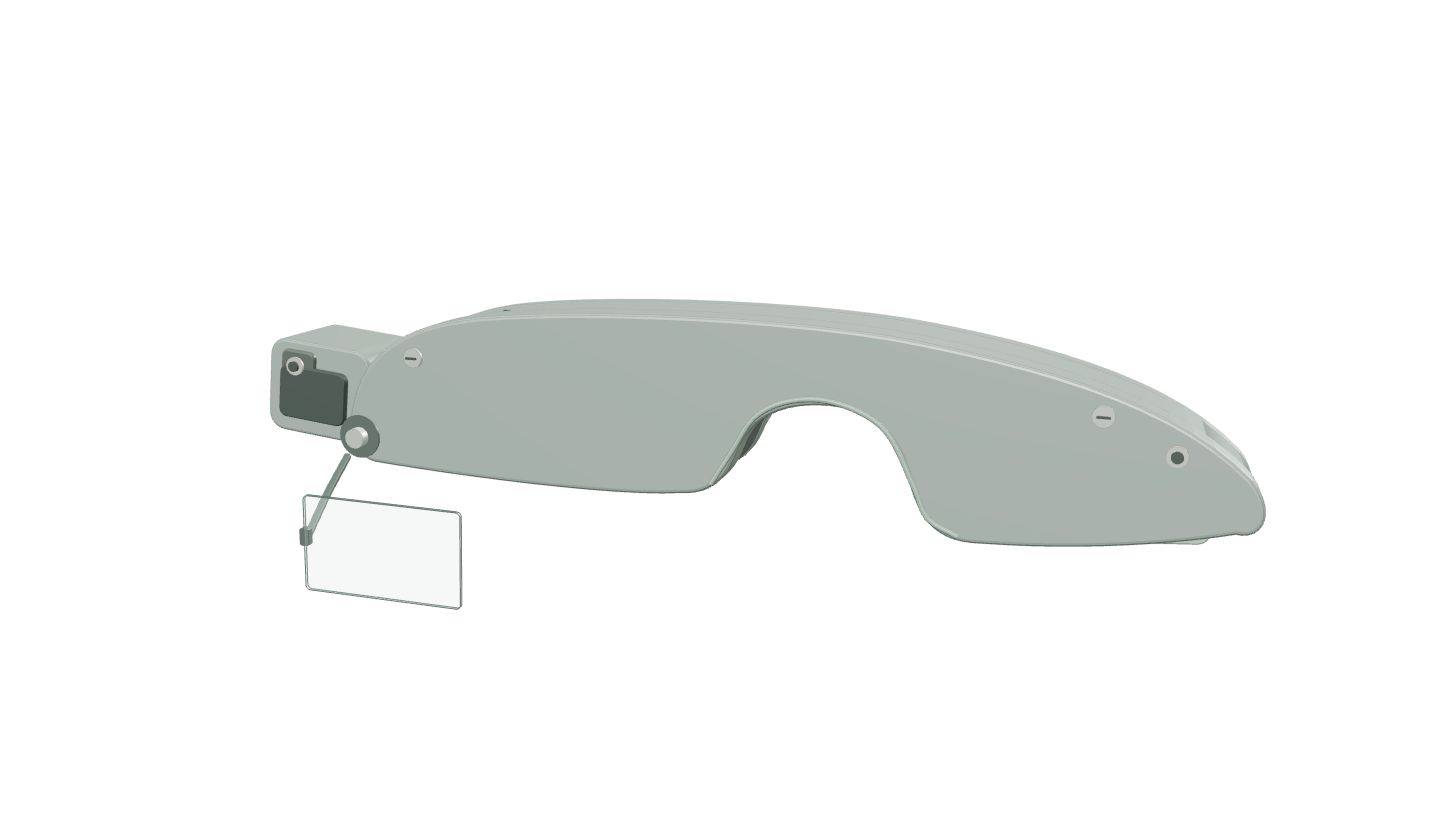
Ergonomic concept
One connected system.
Microphones and processing hardware sit along the frame. A single clear pane presents the cue near the eye.
- 01
Top plate
A removable closure above the visible wiring.
- 02
Processing
Audio becomes a visual sound cue.
- 03
Stereo input
Two microphones provide signals for category and direction.
- 04
Housing
A compact frame holds the sound input and processing hardware.
- 05
Optical path
A display and transparent combiner are intended to present the cue.
From sound to cue
Recognition turns a sound into a cue the wearer can notice.
- 01
Capture sound
Two microphones listen from different positions on the frame.
- 02
Recognise a category
An embedded AI model classifies eight environmental sound categories.
- 03
Estimate direction
Differences between the microphones suggest a coarse direction.
- 04
Present a cue
A direction cue appears near the eye. A Bluetooth phone companion can add a haptic alert.